

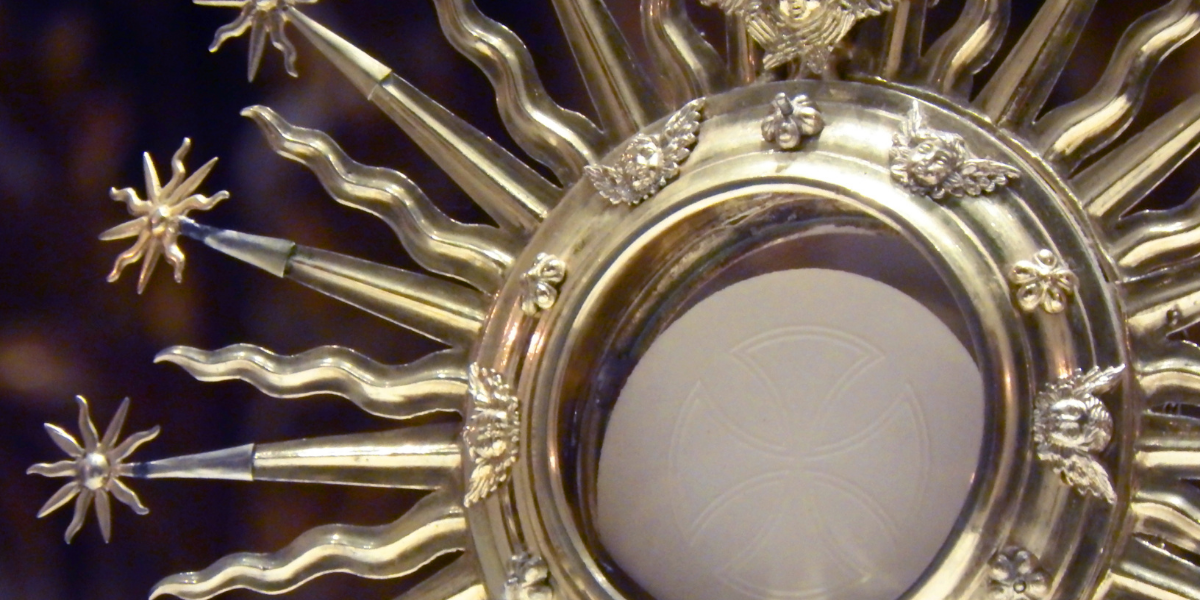
Despite years of nationwide efforts to renew Eucharistic devotion, a troubling reality remains for the Catholic Church in America: most Catholics do not believe that Jesus Christ is truly present in the Holy Eucharist.
A new study published in the academic journal Sociological Inquiry reveals that just 28.8% of American Catholics believe the bread and wine become the Body and Blood of Jesus Christ during the consecration at Mass.
According to EWTN News, the findings raise serious questions about how effectively the Church is communicating one of its most essential teachings, particularly following the launch of the National Eucharistic Revival in 2022.
Researchers surveyed 1,049 Catholics about their understanding of the Eucharist. While fewer than three in ten affirmed the Real Presence, approximately 58.8% said the bread and wine are merely symbols of Christ’s Body and Blood. Another 12.4% were uncertain about what happens during the consecration.
The results suggest that widespread misunderstanding of the Eucharist has persisted for decades.
According to the study’s co-author, Mark Regnerus, the findings show no statistically significant improvement compared with earlier national surveys. A 2019 Pew Research Center study found that 31% of Catholics believed in the Real Presence, while a 1992 Gallup poll placed that figure at approximately 30%.
More than three decades of research therefore point to a remarkably consistent challenge for the Church.
The study also identified a significant relationship between religious practice and Eucharistic belief. Approximately 60% of Catholics who attend Mass weekly affirmed the Real Presence, compared with considerably lower levels among Catholics overall.
Even among respondents who described themselves as very religious, only about 40% expressed belief in the Real Presence.
These findings suggest that participation in Catholic life does not always translate into a clear understanding of the Church’s sacramental teachings.
Has the National Eucharistic Revival Made a Difference?
In June 2022, the United States Conference of Catholic Bishops launched the National Eucharistic Revival to strengthen Catholic belief in and devotion to Jesus Christ in the Blessed Sacrament.
The initiative encouraged Eucharistic adoration, public processions, parish formation programs, and renewed attention to the central place of the Eucharist in Catholic life.
One of its most prominent events was the 2024 National Eucharistic Congress, which brought approximately 60,000 participants together in a public expression of Eucharistic faith.
Yet the latest national findings indicate that these efforts have not produced a measurable increase in belief among American Catholics as a whole.
Church leaders caution, however, that the revival’s impact cannot be measured solely through nationwide polling.
David Spesia, executive director of the USCCB’s Secretariat of Evangelization and Catechesis, acknowledged the longstanding nature of the problem in comments to EWTN News.
“This study highlights that Catholic belief in the Real Presence has been a problem for many years, and it is going to take a while to correct,” Spesia said.
He emphasized that the Church must continue helping Catholics encounter Christ through the sacraments and develop a deeper understanding of their faith.
Spesia also pointed to secularization and a declining appreciation for the supernatural as challenges facing Catholic communities.
Although the revival has not yet changed national belief levels, he maintained that it has strengthened the faith and practices of Catholics who actively participated in its programs.
The bishops continue to encourage Catholics to share their faith personally, including through the revival’s “Walk with One” initiative, which invites believers to accompany another person toward a deeper relationship with Christ.
What Does the Catholic Church Actually Teach About the Eucharist?
For Catholics, the Real Presence is not an optional interpretation of the Mass. It is a fundamental doctrine of the faith, rooted in Sacred Scripture and consistently taught throughout the Church’s history.
The Church teaches that during the consecration, through the ministry of the priest, the bread and wine become the Body, Blood, Soul, and Divinity of Jesus Christ.
This miraculous change is known as transubstantiation.
Although the consecrated Host continues to look and taste like bread, and the Precious Blood retains the appearance of wine, their underlying substance has been transformed into Christ Himself.
The doctrine is grounded in Jesus’ words at the Last Supper, when He declared, “This is my body” and “This is my blood,” as recorded in Matthew 26.
The teaching is also expressed in the sixth chapter of the Gospel of John, where Jesus speaks directly about the necessity of receiving His flesh and blood.
“For my flesh is true food, and my blood is true drink,” Christ declares in John 6:55.
The Gospel records that some listeners struggled to accept His teaching, demonstrating that questions surrounding the Eucharist are not unique to the modern Church.
Early Christian writings further establish that belief in Christ’s Real Presence was embraced long before the development of modern Catholic theology.
According to EWTN News, St. Ignatius of Antioch defended the Eucharist as the flesh of Jesus Christ around A.D. 110, while St. Justin Martyr described the same belief during the second century.
Centuries later, the Council of Trent formally reaffirmed the doctrine of transubstantiation, defending the Church’s understanding of the Eucharist as the true presence of Christ rather than a merely symbolic remembrance.
Why the Decline in Belief Matters
Catholic theologians warn that misunderstanding the Eucharist has consequences extending far beyond a single doctrine.
Jonathan Ciraulo, a theology professor at The Catholic University of America, told EWTN News that belief in the Real Presence “is not a marginal concern” for Catholic life.
The doctrine is intimately connected to the Incarnation, Christ’s sacrifice on Calvary, the resurrection of the body, and the transformation of believers through grace.
Tom Nash, a staff apologist at Catholic Answers, likewise emphasized the Eucharist’s relationship to Christ’s saving sacrifice.
According to Nash, the Eucharistic celebration makes present sacramentally the one sacrifice of Jesus Christ, allowing the faithful to participate in the mystery of redemption.
For Catholics, receiving Holy Communion is therefore far more than participating in a religious tradition or recalling an event from the past.
It is an encounter with Jesus Christ, truly present in the Blessed Sacrament.
The new research presents a serious challenge for Catholic educators, pastors, parents, and parish communities entrusted with passing on the faith.
While the National Eucharistic Revival has brought renewed attention to Eucharistic worship, the findings suggest that continued catechesis and personal evangelization will be essential if belief is to grow among Catholics who remain uncertain or disconnected from regular sacramental life.
The question facing the Church is not simply how many Catholics attend Eucharistic events, but how effectively the truth of the Eucharist is being taught, understood, and lived.
For a Church that proclaims the Eucharist as the source and summit of Christian life, helping Catholics recognize Jesus Christ in the Blessed Sacrament remains one of its most urgent missions.
Your support brings the truth to the world.
Catholic Online News exists because of donors like you. We are 100% funded by people who believe the world deserves real, uncensored news rooted in faith and truth — not corporate agendas. Your gift ensures millions can continue to access the news they can trust — stories that defend life, faith, family, and freedom.
When truth is silenced, your support speaks louder.


