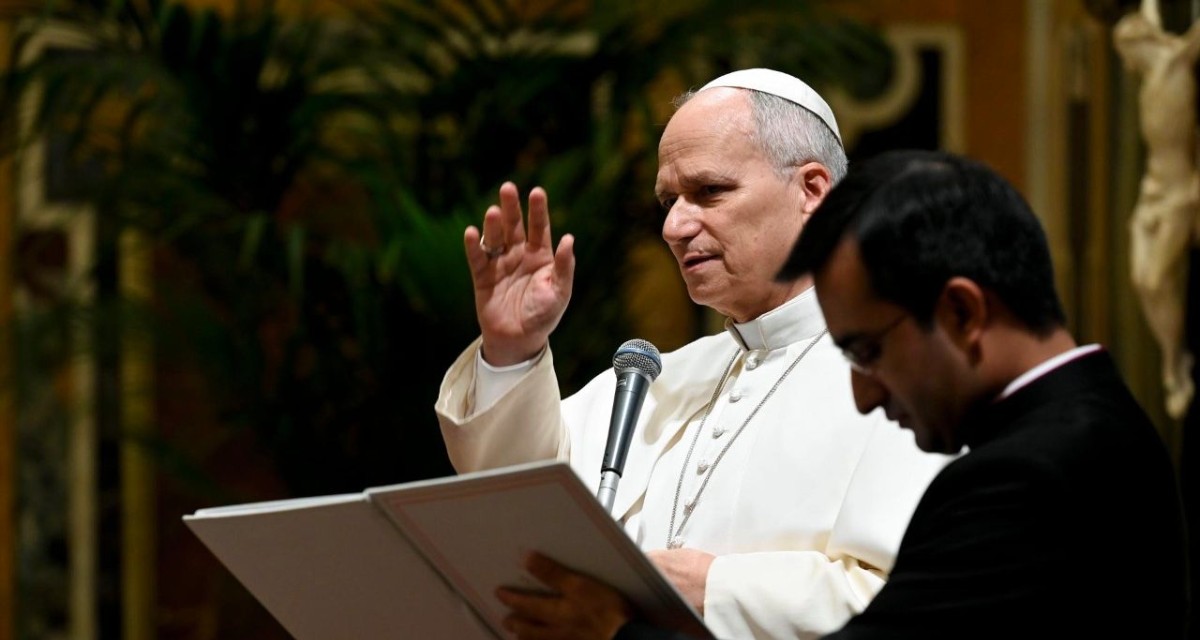

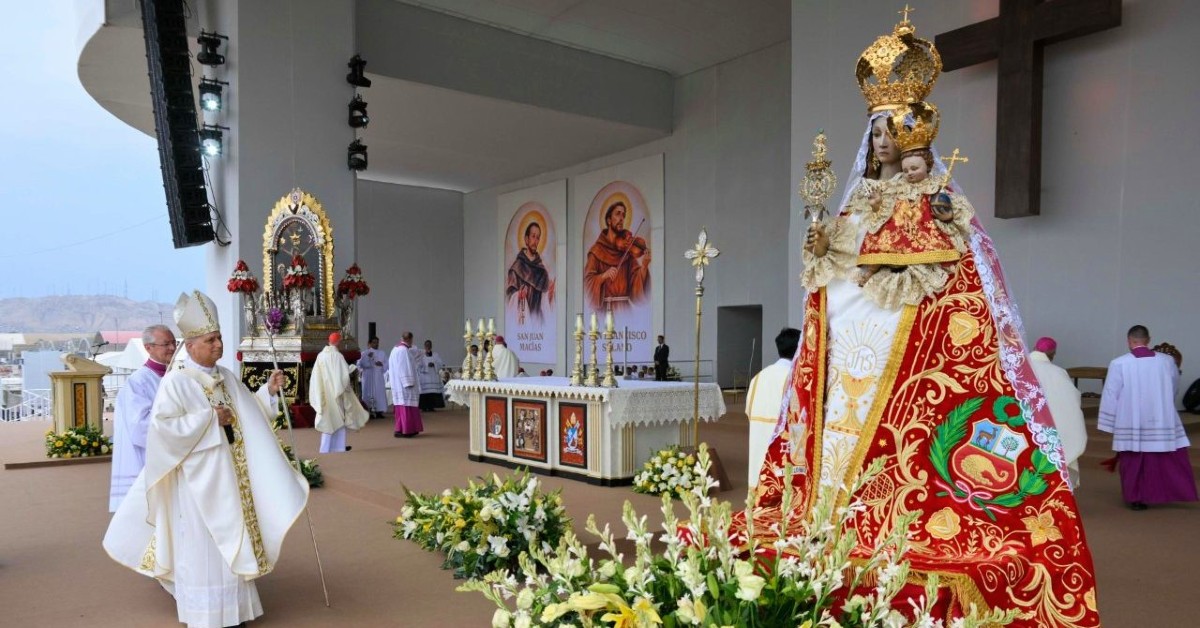
Pope Leo XIV concluded his historic 12-day Apostolic Journey to South America on Monday, November 16, with a powerful call for Catholics to embrace their missionary responsibility and bring the Gospel of Jesus Christ to a world in need of faith, truth, and hope.
Celebrating the final Mass of his journey through Uruguay, Argentina, and Peru, the Holy Father reminded the faithful that the Church’s mission does not end when the celebration of the Eucharist concludes. Instead, every Catholic is called to carry Christ’s message into daily life, sharing the Good News with those who have yet to encounter Him.
According to Vatican News, more than one million people gathered in Lima for the celebration, where Pope Leo reflected on Christ’s command to His disciples to spread the Gospel throughout the world.
At the heart of his homily was the Great Commission, Jesus’ instruction to His followers to “go and make disciples of all nations.”
The Pope emphasized that this command remains central to the Church’s identity and purpose, just as it was when Christ first entrusted His mission to the Apostles.
“The command of the one true Lord, which we have heard proclaimed in the Gospel, helps us understand the very essence of the Church’s mission: to carry forward the work of Jesus Christ through his power, which is so different from the powers of this world,” Pope Leo declared.
His message served as a reminder that evangelization is not simply a responsibility belonging to priests, bishops, or missionaries. The Church’s mission continues through the witness of the faithful, who are sent into the world to proclaim Christ.
The Holy Father pointed to the extraordinary example of Saint Turibius of Mongrovejo, the second Archbishop of Lima, whose missionary work demonstrated how the Gospel can transform lives through faith, compassion, and respect for human dignity.
According to Vatican News, Pope Leo praised Saint Turibius for his dedication to the Indigenous communities of Peru, including his determination to learn their languages and encourage other priests to do the same.
The saint also supported the ordination of Indigenous men and those of mixed European and Indigenous ancestry, challenging the prejudices of his time.
Pope Leo highlighted an especially important aspect of Saint Turibius’ missionary approach: the conviction that faith must be embraced freely rather than imposed through force.
“Saint Turibius wanted Indigenous people themselves to evangelize their relatives, friends and neighbours,” the Pope explained.
The Holy Father recalled that the saint wanted people to turn toward the Christian faith through their own free decisions, without coercion.
For Catholics today, this example offers an important lesson about the way the Gospel should be shared. Evangelization requires more than proclaiming religious teachings. It also calls for patience, gentleness, and a genuine concern for the people being invited to know Christ.
Saint Turibius demonstrated that commitment through his defense of vulnerable communities and his willingness to bring their complaints and concerns before civil authorities in an effort to confront injustice.
The Pope also reflected on the importance of unity within the Church, emphasizing that differences in perspectives and experiences need not undermine the shared faith that unites Catholics.
He described Saint Turibius as “a builder of the civilization of love,” pointing to the saint’s efforts to strengthen the Church through councils, synods, and relationships rooted in Christian charity.
As his visit drew to a close, Pope Leo offered a particularly personal message to the people of Peru, expressing his enduring affection for the country and its faithful.
“I too wish to strengthen you in faith and charity, and to assure you that I will always carry you with me. Yes, the Peruvian people are my people too!” he said.
The words underscored the Holy Father’s deep connection to Peru while reinforcing his desire to encourage its Catholic community in the work of evangelization.
Yet the conclusion of the papal journey was not presented as an ending.
Instead, Pope Leo reminded those gathered that the mission entrusted to the Church by Jesus Christ continues beyond any single celebration, pilgrimage, or papal visit.
“Let us remember that at the end of every Mass, we are sent forth to evangelize,” he told the faithful.
His final exhortation captured the central message of the celebration:
“Therefore, go forth and proclaim the true God! Bear witness to what you have seen and heard! Let no one be deprived of the opportunity to know this Good News!”
For Catholics around the world, the Pope’s words offer a timely reminder that the call to evangelize begins in ordinary life: within families, among friends, in communities, and wherever opportunities arise to share the love and truth of Jesus Christ.
As Pope Leo XIV concluded his journey through South America, he left the faithful with a mission that reaches far beyond Peru: to live their faith courageously, bear witness to Christ, and help ensure that the Good News of salvation is shared with all.
Your support brings the truth to the world.
Catholic Online News exists because of donors like you. We are 100% funded by people who believe the world deserves real, uncensored news rooted in faith and truth — not corporate agendas. Your gift ensures millions can continue to access the news they can trust — stories that defend life, faith, family, and freedom.
When truth is silenced, your support speaks louder.