

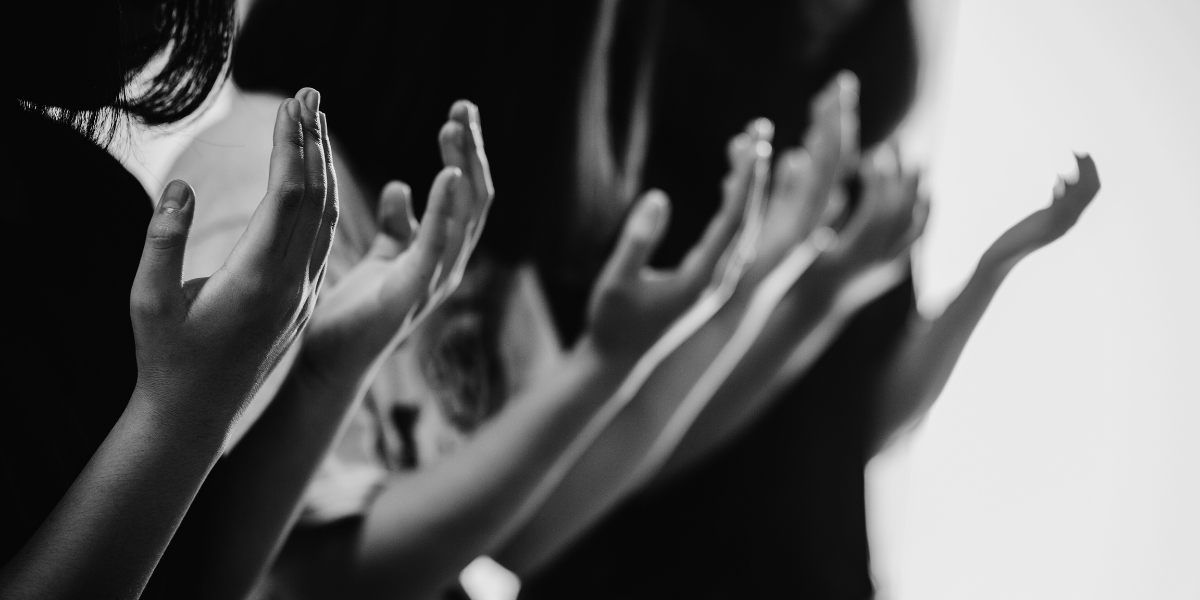
A familiar practice during Catholic Mass is receiving renewed scrutiny after the Archdiocese of Portland, Oregon, issued guidance instructing the faithful to refrain from holding hands or raising their arms while praying the Our Father.
The directive addresses a longstanding question about proper participation in the sacred liturgy and emphasizes the distinction between the gestures assigned to the priest and those of the congregation.
According to LifeSiteNews, the archdiocese recently published the instruction through its liturgy office, explaining that the posture commonly known as orans, in which the arms are extended during prayer, belongs specifically to the celebrating priest during Mass.
“Laity should refrain from extending hands during the Our Father at Mass,” the archdiocese stated.
The guidance also discourages the practice of holding hands with neighboring worshippers during the Lord’s Prayer, a custom that has become familiar in some Catholic parishes.
Why the Archdiocese Is Addressing the Practice
For many Catholics, raising their hands during the Our Father has become an ordinary expression of prayer. Others prefer to keep their hands folded, while some congregations have developed the custom of joining hands.
However, the Archdiocese of Portland is emphasizing that the gestures used during Mass are not simply matters of individual preference.
According to the archdiocese’s explanation, the General Instruction of the Roman Missal (GIRM) establishes the appropriate postures and gestures for those participating in the liturgy.
The document specifically directs the priest to extend his hands during the Lord’s Prayer but does not assign that same gesture to deacons or members of the congregation.
As the archdiocese acknowledged, “While the GIRM does not explicitly forbid the lay faithful from using the Orans posture during the Our Father, it gives guidance as to why the lay faithful should not use this posture.”
The distinction is significant because the priest’s gestures reflect his particular responsibility in leading the Church’s public worship.
According to the archdiocese, when the priest extends his hands in prayer, he does so in his liturgical role as the one praying on behalf of the assembled faithful.
A Question of Liturgical Tradition and Authority
The archdiocese’s instruction also points to the historical development of the Mass.
Before the introduction of the revised Roman Missal in 1970, the Lord’s Prayer was recited by the priest as part of the liturgy, with his hands extended in prayer.
Although the revised liturgy provided for the congregation to pray the Our Father together, the archdiocese explained that neither the 1970 Roman Missal nor the documents of the Second Vatican Council established a corresponding change in the posture of the faithful.
The guidance also draws upon Sacrosanctum Concilium, the Second Vatican Council’s Constitution on the Sacred Liturgy, which teaches that “no other person, even if he be a priest, may add, remove, or change anything in the liturgy on his own authority.”
According to LifeSiteNews, the archdiocese applied this principle to the gestures used during the Lord’s Prayer, concluding that extending or joining hands introduces a practice not prescribed for the congregation.
The directive states, “Therefore, the practice of the lay faithful extending their hands (or holding hands) during the Our Father should not be done.”
Preserving the Distinct Role of the Priest
The Portland guidance goes beyond the question of personal prayer habits, connecting the issue to the Church’s understanding of the priesthood and the sacred responsibilities entrusted to ordained ministers.
According to the report, the archdiocese referenced the Code of Canon Law and the 1997 Church instruction Ecclesiae de Mysterio, which addresses cooperation between ordained ministers and the non-ordained faithful.
These teachings emphasize that certain liturgical prayers and actions belong specifically to the priest celebrating Mass.
The archdiocese therefore calls for appropriate instruction so Catholics can better understand why particular gestures are reserved for ordained ministers.
The concern is not whether lay Catholics may pray with raised hands in other settings. Scripture contains examples of believers lifting their hands in prayer, and early Christian artwork also depicts figures praying with outstretched arms.
Rather, the question concerns the particular requirements of the Mass, where the Church establishes distinct liturgical roles and gestures.
What This Means for Catholics Attending Mass
The Archdiocese of Portland’s guidance offers a reminder that participation in the Mass involves more than following familiar parish customs.
For Catholics accustomed to holding hands during the Our Father, the instruction may represent a change in how they have participated in the liturgy for years.
However, the archdiocese presents the directive as an effort to clarify the Church’s liturgical expectations and preserve the meaning of gestures assigned to the priest.
The guidance also highlights an important distinction: although the GIRM does not expressly prohibit the faithful from adopting the orans posture, the Portland Archdiocese has concluded that the gesture should not be used by lay worshippers during the Lord’s Prayer.
The instruction comes from the Archdiocese of Portland and should not be understood as a newly announced universal prohibition applying automatically to every Catholic diocese.
For Catholics, the broader message concerns reverence for the Eucharistic celebration and fidelity to the Church’s liturgical traditions.
As questions about worship practices continue to arise, the Portland directive invites the faithful to consider not only the words spoken during Mass but also the meaning of the gestures accompanying them.
The Our Father remains a prayer of unity, offered by the entire congregation to God the Father. The archdiocese’s guidance emphasizes that this unity does not require everyone to adopt the same physical gestures as the priest.
Instead, the Church’s prescribed liturgical roles and postures are intended to express the sacred order and meaning of the celebration.
Your support brings the truth to the world.
Catholic Online News exists because of donors like you. We are 100% funded by people who believe the world deserves real, uncensored news rooted in faith and truth — not corporate agendas. Your gift ensures millions can continue to access the news they can trust — stories that defend life, faith, family, and freedom.
When truth is silenced, your support speaks louder.


